Auditing ESG Claims with Analytics: Separating Greenwashing from Real Impact
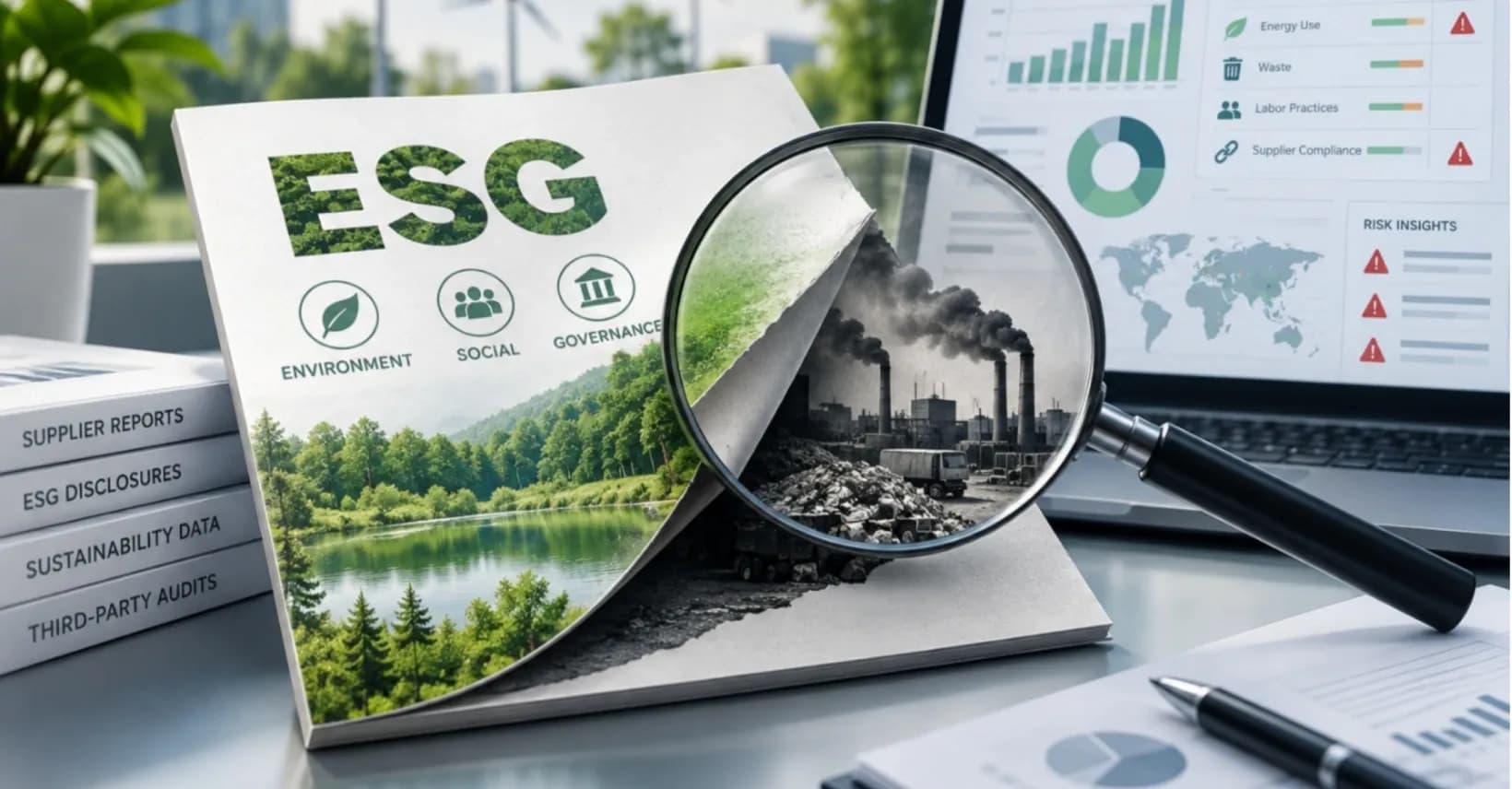
Sustainability claims have become a standard line item in supplier pitches, RFP responses and marketing decks. "Carbon neutral," "ethically sourced" and "zero waste" are everywhere. But the evidence behind these claims often isn't.
As regulators, investors and customers stop taking these claims at face value, procurement teams are under growing pressure to prove, not just report, that their supply chains are as sustainable as they claim to be.
That shift is driving the rapid rise of ESG analytics in procurement: the use of data, automation and verification tools to separate genuine environmental and social impact from greenwashing.
Why Self-Reported ESG Data Is No Longer Enough
For years, supplier sustainability assessments relied heavily on questionnaires and self-attestation. A supplier would fill out a form, attach a certificate and procurement would file it away.
That model is breaking down.
Investors and ESG rating agencies are pushing scrutiny further down the supply chain. Regulatory frameworks such as the EU's Corporate Sustainability Reporting Directive (CSRD) and California's SB 253 are also raising the evidentiary bar for what counts as an acceptable disclosure.
The scale of the data gap is significant. Despite widespread adoption of ESG programs, a large share of suppliers still cannot produce basic emissions data. Most organizations also have limited visibility beyond their direct Tier 1 suppliers. Visibility into Tier 2 and beyond remains the exception rather than the rule.
That opacity is precisely where greenwashing hides. It is easy to make a broad sustainability claim about a supply chain that is several tiers deep and largely undocumented.
At the same time, enforcement pressure is compounding.
When regulators require asset managers to substantiate the sustainability claims behind their funds, those managers push scrutiny into the companies they invest in. Those companies in turn push scrutiny into their suppliers.
The result is a chain of accountability that increasingly reaches all the way into procurement's supplier files. Procurement teams that cannot produce an audit trail are exposed to real regulatory, contractual and reputational risk.
What Does "Auditing" an ESG Claim Actually Mean?
An ESG audit is not a single check. It is a structured process to confirm that a disclosure is accurate, consistent and traceable back to a verifiable source.
In practice, that means auditors and procurement teams look for:
Primary measurement over estimation: Actual metered energy use or emissions data carries more weight than industry-average estimates applied uniformly across a supplier base.
Third-party verification over self-reporting: Independent certifications, site audits and external data sources are weighted more heavily than a supplier's own questionnaire answers.
Consistency across reporting cycles: Auditors increasingly look at whether a supplier's data collection methodology and figures remain stable or shift suspiciously from one reporting period to the next.
Retained evidence: Claims need a documented trail including the underlying data, the assessment method and the date it was collected, not just a final summary number.
This is where dedicated ESG data auditing tools come in.
Rather than relying on a procurement analyst to manually cross-check a spreadsheet of supplier claims against external sources, these platforms automate the comparison. They can flag suppliers whose self-reported figures diverge sharply from independent benchmarks, industry norms or prior submissions.
How Analytics Helps Verify Supplier ESG Claims
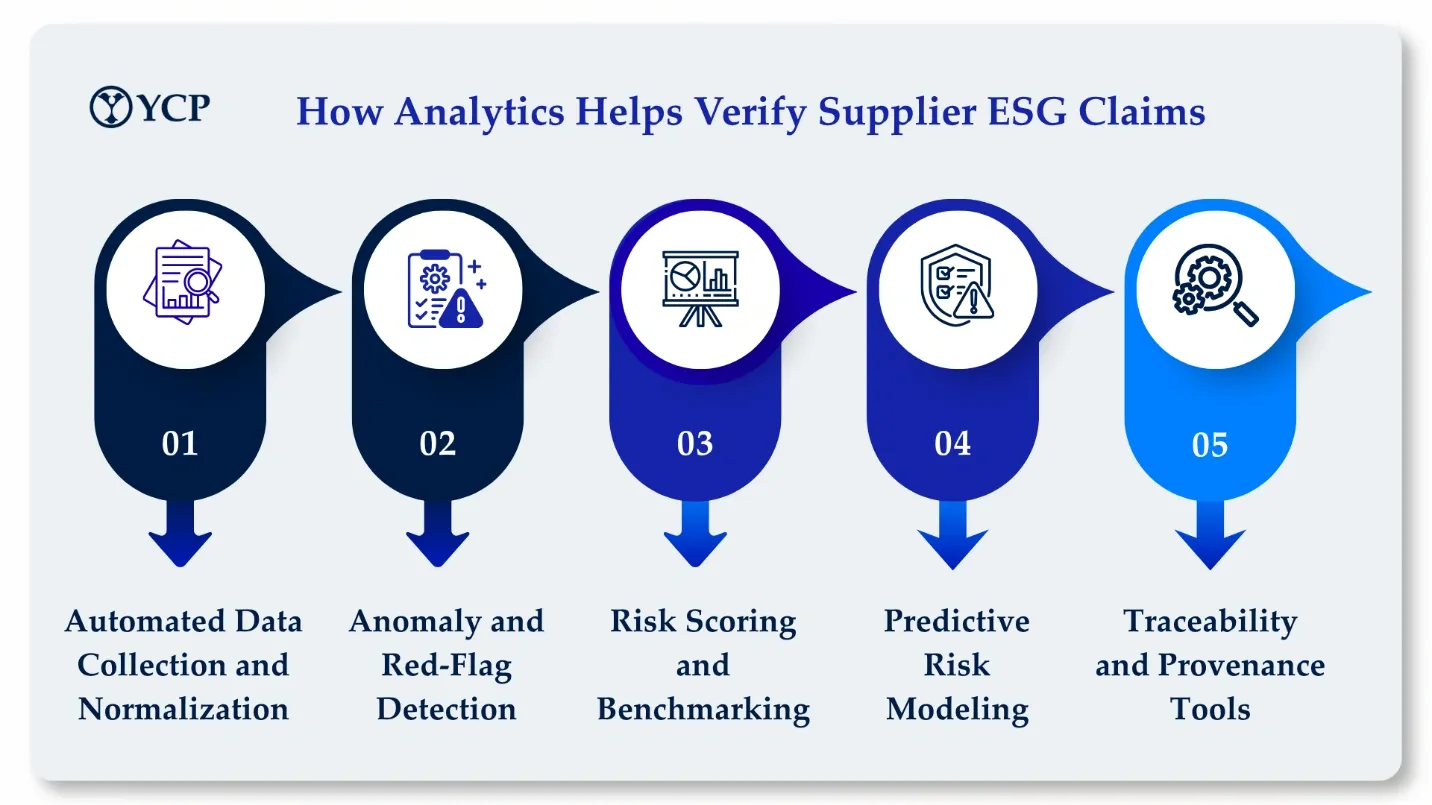
The practical application of analytics to sustainability data can be broken down into five connected capabilities.
1. Automated Data Collection and Normalization
ESG platforms pull data from supplier questionnaires, certifications, public disclosures and satellite or sensor-based sources. They then standardize the data so it can be compared across a supplier base that otherwise reports in inconsistent formats and units.
2. Anomaly and Red-Flag Detection
Machine learning models are increasingly used to scan supplier data and external sources such as news, litigation records, sanctions lists and controversy databases for signals that contradict a supplier's stated ESG performance.
These signals could include labour violations or compliance breaches that do not appear in self-reported disclosures.
3. Risk Scoring and Benchmarking
Instead of a binary pass/fail assessment, modern platforms assign suppliers a dynamic ESG risk score based on sector, geography and historical performance.
Procurement teams can then use these scores to prioritize which suppliers require a deeper audit or site visit.
4. Predictive Risk Modeling
By analyzing patterns and trends across a supplier's historical data, predictive analytics can flag suppliers that are likely to develop compliance issues before they become disruptions.
This shifts ESG management from reactive to proactive.
5. Traceability and Provenance Tools
Distributed-ledger and product-tracing technologies are being applied to verify the authenticity of sourcing and sustainability claims at the material or product level.
This helps close gaps that questionnaires alone cannot reach.
Together, these capabilities let procurement move from asking suppliers "What do you claim?" to systematically asking "What does the evidence show?"
That is the core distinction between a sustainability narrative and an audited one.
Turning Audit Findings Into Procurement Decisions
Verification only creates value if it changes behaviour.
Audit and analytics findings should feed directly into supplier scorecards, sourcing decisions and ongoing monitoring rather than sit in a static annual report.
Leading procurement functions are:
Embedding ESG risk scores directly into supplier onboarding and requalification workflows rather than treating sustainability as a separate parallel process.
Using red-flag alerts to trigger deeper audits or site visits for suppliers whose data patterns look inconsistent rather than auditing on a fixed annual schedule regardless of risk.
Rewarding verified high performers with preferred status, longer contracts or co-development opportunities. This creates a real incentive to invest in accurate reporting rather than favorable-sounding claims.
Escalating unresolved data discrepancies to legal or compliance review before further spend is committed to a supplier. This treats unverifiable claims as a business risk rather than an administrative footnote.
The Bigger Picture: From Aspiration to Evidence
The direction of travel across regulation, investor expectations and buyer behaviour is consistent: sustainability claims are moving from aspirational marketing language towards auditable and contractable data.
Consumers are also part of this pressure. A large majority now say they actively look for sustainability and sourcing information before purchasing. This means unverifiable claims carry brand risk even outside formal audits and regulatory reviews.
For procurement organisations, this means the function once viewed mainly as a cost and risk centre is becoming a frontline defence against greenwashing. This includes both the claims suppliers might present to buyers and the claims a company might unintentionally present to its own customers and investors by passing along unverified supplier claims.
Building this capability does not happen overnight.
It requires consistent supplier data capture, documented assessment controls and technology that can operate at the scale of a global supplier base. Manual questionnaires and point-in-time audits were never designed to do this.
But organizations that invest now in ESG analytics in procurement, building the infrastructure to systematically verify supplier ESG claims rather than simply collect them, will be better positioned to withstand scrutiny when regulators, lenders or major customers eventually ask them to prove it.
Get in Touch with Us
Get in touch with us to discuss your strategic needs and how we can help you develop a plan to accelerate your growth
Schedule a Consultation