Cost Cutting vs Cost Avoidance: A Procurement Guide

Procurement is a strategic function that plays a significant role in controlling organisational spending and improving overall business performance.
Beyond simply purchasing goods and services, procurement professionals are responsible for identifying opportunities to reduce costs, manage risks and create long-term value.
Two of the most common approaches used to achieve these objectives are cost cutting and cost avoidance.
Although these terms are often used interchangeably, they represent different strategies with distinct financial impacts.
Understanding the difference between cost cutting and cost avoidance enables organisations to make informed procurement decisions that balance immediate savings with sustainable financial growth.
Cost Cutting vs. Cost Avoidance
What Is Cost Cutting?
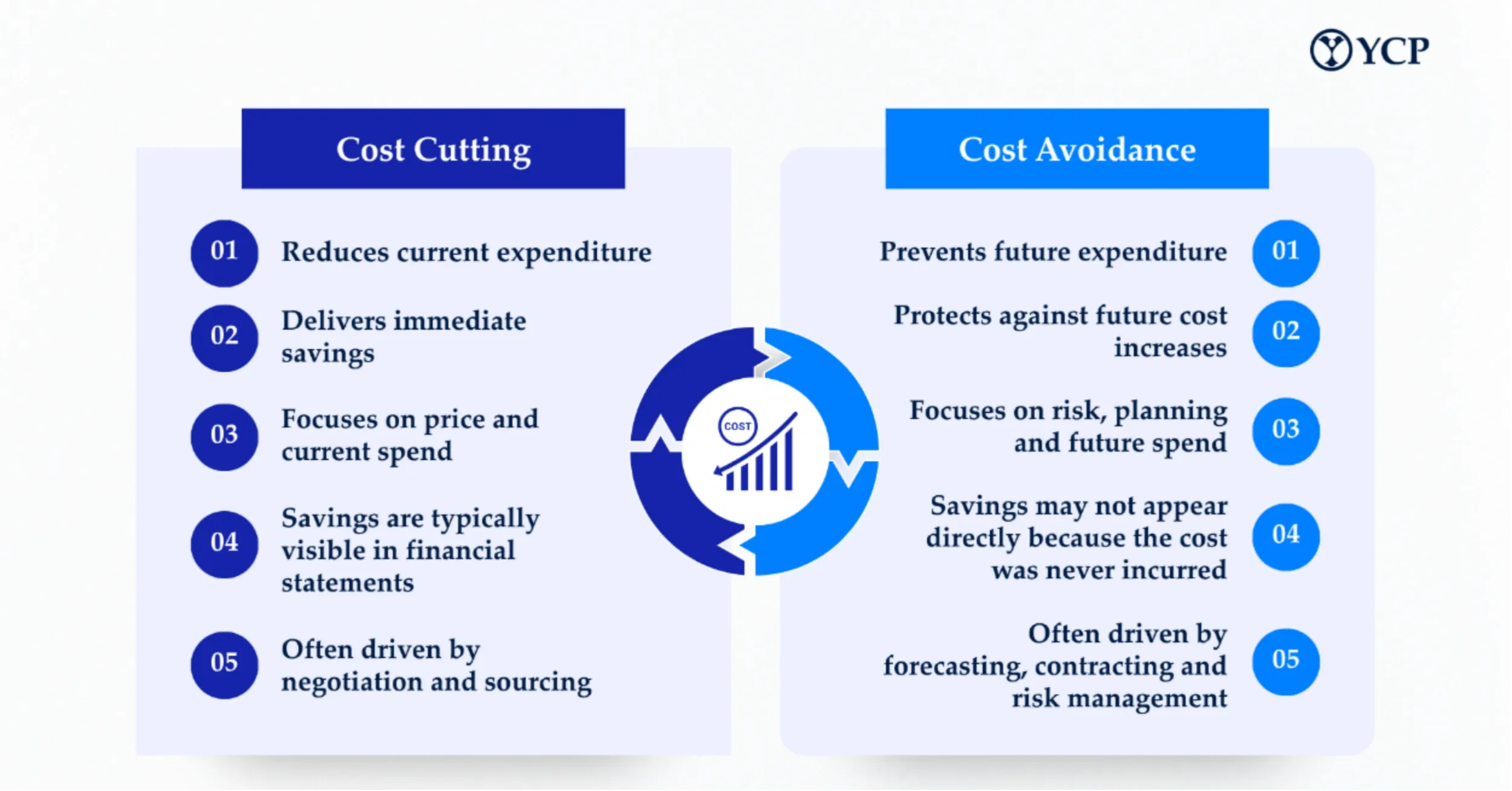
Cost cutting refers to the reduction of current or existing expenses by lowering the amount an organisation spends on products, services or operations.
These savings are immediate, measurable and reflected directly in financial statements.
Procurement teams typically achieve cost cutting by:
Negotiating lower prices with suppliers
Consolidating purchases to benefit from volume discounts
Eliminating unnecessary spending
Identifying alternative suppliers that offer similar quality at a lower cost
While cost cutting can improve short-term profitability and help organisations meet budget targets, an excessive focus on reducing costs may negatively affect product quality, supplier relationships or service levels if implemented without careful consideration.
What Is Cost Avoidance?
Cost avoidance focuses on preventing future costs rather than reducing current expenditure.
It involves proactive procurement strategies that protect the organisation from anticipated cost increases, operational risks or unnecessary future expenses.
Examples include:
Negotiating long-term fixed-price contracts before market prices rise
Improving demand forecasting to avoid emergency purchases
Selecting higher-quality equipment that reduces maintenance costs
Implementing strategic sourcing initiatives that minimise supply chain disruptions
Although cost avoidance savings may not always appear directly in financial reports because they represent costs that were never incurred, they provide substantial long-term value by preserving budgets and improving financial stability.
The Key Difference Between Cost Cutting and Cost Avoidance
The key difference between the two approaches lies in their timing and purpose.
Cost cutting delivers immediate and visible financial savings.
Cost avoidance protects the organisation from future financial pressures.
Consider two examples.
Cost cutting: Reducing the purchase price of office furniture by 15% is a cost-cutting initiative because it lowers current spending.
Cost avoidance: Securing a fixed-price contract before a supplier implements a planned price increase is a cost avoidance initiative because it prevents additional future costs.
The distinction is important because procurement performance should not be measured solely by the costs that have been reduced. Costs that have been prevented can also represent significant value to the organisation.
Why Procurement Needs Both Strategies
Successful procurement organisations recognise that cost cutting and cost avoidance are not competing approaches. They are complementary strategies that address different financial challenges.
Cost cutting can help procurement deliver immediate savings and improve short-term financial performance.
Cost avoidance can help protect budgets from future cost increases and reduce exposure to operational and supply chain risks.
Together they allow procurement teams to take a more balanced approach to value creation.
Building a Balanced Procurement Strategy
A strong procurement strategy should combine both approaches rather than rely exclusively on one.
Procurement teams can use cost cutting to identify immediate opportunities to reduce spending while using cost avoidance to protect the organization from future financial pressures.
This requires procurement professionals to look beyond the price on today's purchase order and consider the total financial impact of sourcing decisions over time.
By doing so, procurement can move from simply reducing costs to actively protecting and creating value for the organization.
Conclusion
Cost cutting and cost avoidance are complementary procurement strategies that contribute to an organization's financial success in different ways.
While cost cutting focuses on achieving immediate reductions in current spending, cost avoidance emphasizes proactive planning to prevent future expenses and minimize business risks.
A balanced procurement strategy incorporates both approaches. This enables organizations to realize short-term savings while building long-term resilience and value.
By effectively combining cost cutting with cost avoidance, procurement professionals can strengthen supplier relationships, improve operational efficiency, support sustainable profitability and establish procurement as a strategic contributor to organizational success.
Get in Touch with Us
Get in touch with us to discuss your strategic needs and how we can help you develop a plan to accelerate your growth
Schedule a ConsultationRelated Articles

Procurement Transformation: From Cost to Strategic Value
Industrials
Why Process Mapping Is the Foundation of Procurement Excellence
Industrials
Is Your Material Data Quietly Costing You Millions?
Industrials