How BluMor Helps CPOs Track, Report and Optimize in Real Time
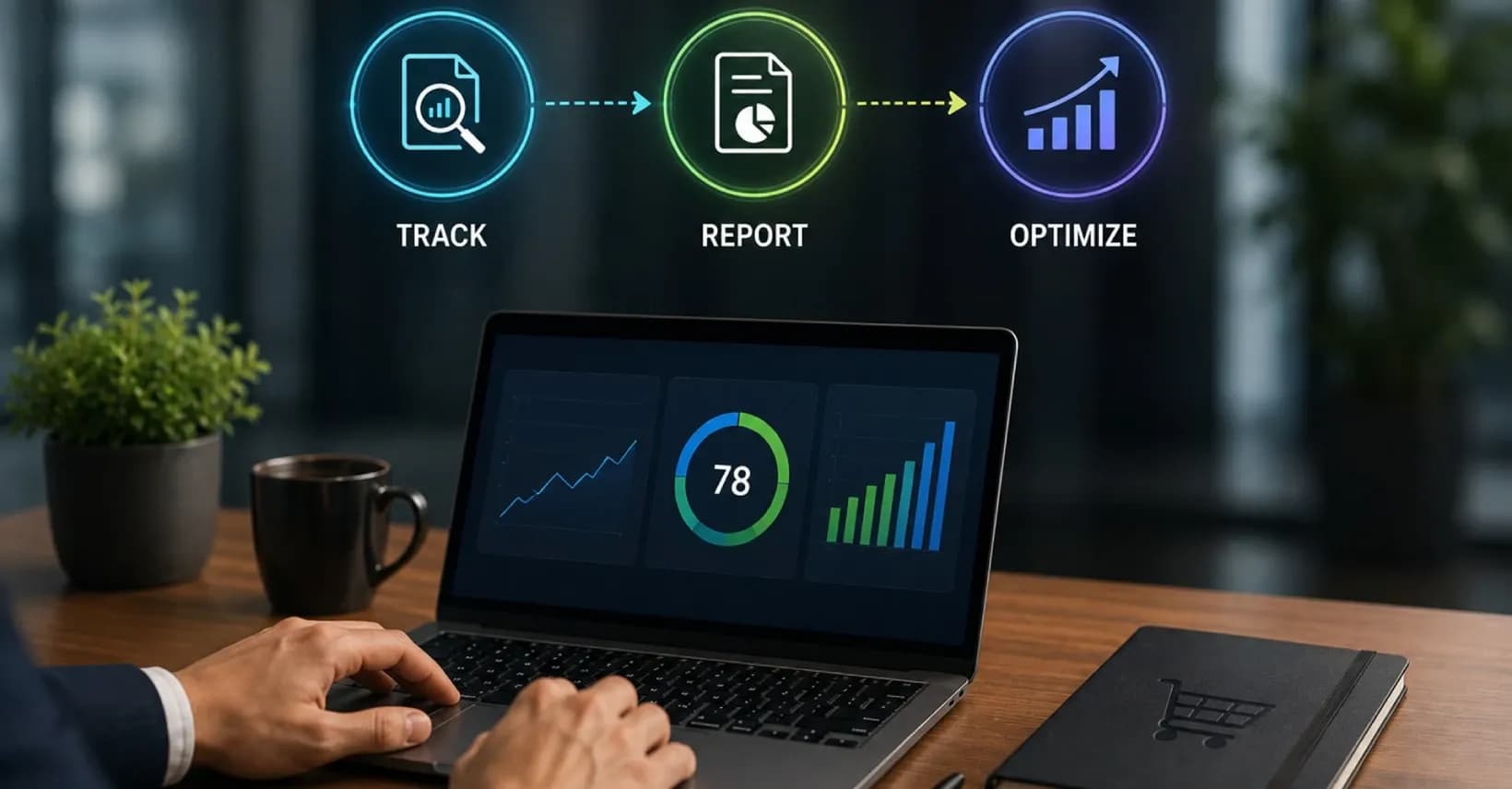
Ask any CPO how much the organization spent last quarter, across all business units, broken down by category and supplier and watch what happens next. Not because they don’t care about the answer. Because getting it requires pulling exports from multiple ERP systems, chasing regional leads for their numbers and then spending days reconciling figures that were never designed to speak to each other. By the time the report lands, the decisions it should have informed have already been made.
This is not a technology failure or a process failure. It is a structural one and it repeats itself every reporting cycle, in organizations of every size and sector. The data exists. It always has. The problem is that it lives in fragments, arrives too late and takes too much effort to turn into something a leader can act on. BluMor was built to close that gap.
The Challenges Sitting on Every CPO’s Desk
Fragmented data is the root cause of most procurement blind spots. When spend information lives across multiple ERP systems, spreadsheets and regional databases, there is no single version of the truth. Category managers work from different numbers than finance. Leadership makes decisions on figures that are weeks old. The result is not just inefficiency, it is missed savings, undetected leakage and supplier relationships managed on gut feel rather than performance data.
Compliance is another persistent pressure point. Procurement teams are increasingly expected to demonstrate adherence to sustainability commitments, regulatory requirements and internal policy, often simultaneously. Without automated tracking and audit-ready reporting, compliance becomes a manual, resource-intensive exercise that pulls skilled people away from strategic work.
Supplier risk has also grown more complex. Supply chain disruptions, geopolitical shifts and raw material volatility mean that a single-source dependency or a financially stressed supplier can create ripple effects across an entire operation. Most procurement teams only discover these risks after they have already become problems, because the signals were buried in data no one had time to analyze.
Finally, there is the pressure to demonstrate value. CPOs are increasingly expected to quantify procurement’s contribution, not just in cost savings, but in working capital impact, risk reductionand strategic outcomes. That is nearly impossible when reporting is still a manual exercise and the data behind it is unreliable.
Procurement Challenges Solved: Two Stories from the Field
Case Study 1: Getting Spend Under Control at a Global Packaging Manufacturer
Following a series of acquisitions, a large packaging manufacturer found itself managing procurement across six business units, each running a different ERP system and each generating spend reports in its own format. Nobody could answer a basic question - “How much are we spending on indirect materials globally?” - without a two-week data exercise.
After processing their spend data through BluMor, the company unified all spend insights into a view within weeks. The AI engine automatically classified spend categories and flagged anomalies that had been invisible in the siloed reporting model. For the first time, category managers could see cross-BU spend by supplier, by commodity and by region in real time.
The measurable outcome: a 14% reduction in tail spend within the first two quarters, driven by consolidating duplicate supplier relationships that had been invisible in the old reporting model.
Case Study 2: Uncovering Savings in Plain Sight at a Leading Automobile Organization
A leading automobile organization with strong category management fundamentals engaged BluMor as part of a broader digital transformation initiative. Once their spend data was processed through the BluMor engine, it surfaced insights that even an experienced team couldn't have uncovered manually. The BluMor engine’s spend analytics surfaced something unexpected: a significant portion of “approved” spend was flowing through non-preferred suppliers at above-contract pricing, largely because the buying system did not enforce compliance at the point of purchase.
With BluMor’s continuous processing and monitoring, the team was able to identify the leakage, re-route spend to contracted suppliers and build an automated alert system for future deviations. The process that used to require a quarterly audit now ran continuously in the background.
The measurable outcome: $2.3M in annual savings recovered in the first year; not from renegotiating contracts, but from actually using the ones already in place.
What BluMor Puts in a CPO’s Hands
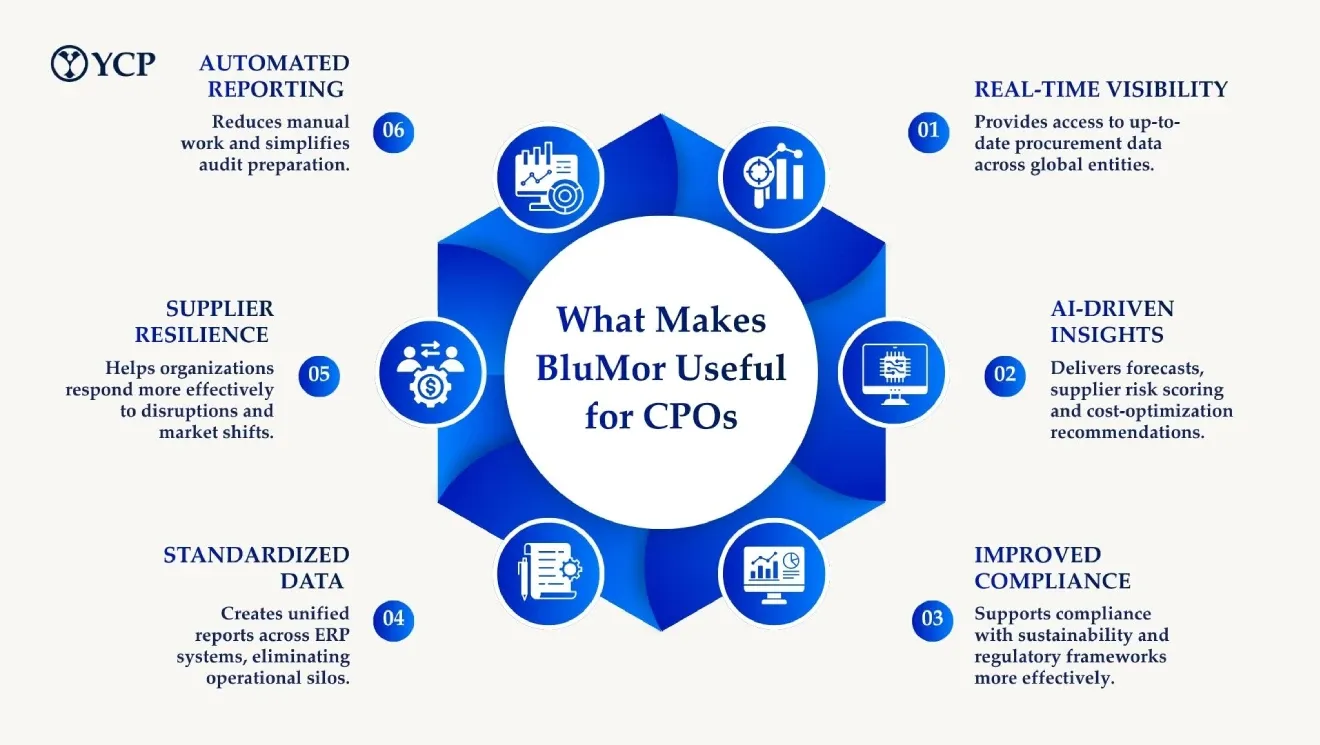
Real-Time Spend Visibility: Access to consolidated, up-to-date procurement data across all business units and geographies, without waiting for month-end reporting cycles.
AI-Driven Insights: Once data is processed through the BluMor engine, it automatically classifies, score supplier risk and cost-optimization recommendations powered by machine learning, so the team can act on signals rather than hunt for them.
Compliance Tracking: Continuous monitoring against sustainability, regulatory and internal policy frameworks, with audit-ready reporting built in.
Standardized Data Across ERP Systems: A unified data layer built from data that customers provide data from their ERP system and processed through Blumor engine to eliminate the reconciliation burden that consumes so much procurement bandwidth.
Supplier Resilience Intelligence: Early warning signals for supplier financial health, delivery performance and market risks, enabling proactive rather than reactive responses.
Automated Reporting: Reports that used to take days now generate automatically, freeing the team to focus on analysis and strategy instead of data assembly.
A Clearer View, Faster
Procurement’s strategic value has never been more visible or more scrutinized. CPOs are expected to manage cost, risk, compliance and supplier relationships simultaneously and to report on all of it with precision. That is only possible when the data foundation is solid.
BluMor gives CPOs that foundation. It does not replace procurement expertise – it removes the friction that keeps that expertise from being used effectively. When spend data is clean, current and consolidated, decisions get faster, savings become visible and the function can finally operate at the strategic level it is capable of.
In a business environment where supply chains shift quickly and the cost of slow decisions is high, that clarity is not just useful. It is a competitive advantage.
Get in Touch with Us
Get in touch with us to discuss your strategic needs and how we can help you develop a plan to accelerate your growth
Schedule a Consultation
