How Technology Is Transforming Procure-to-Pay (P2P) Operations
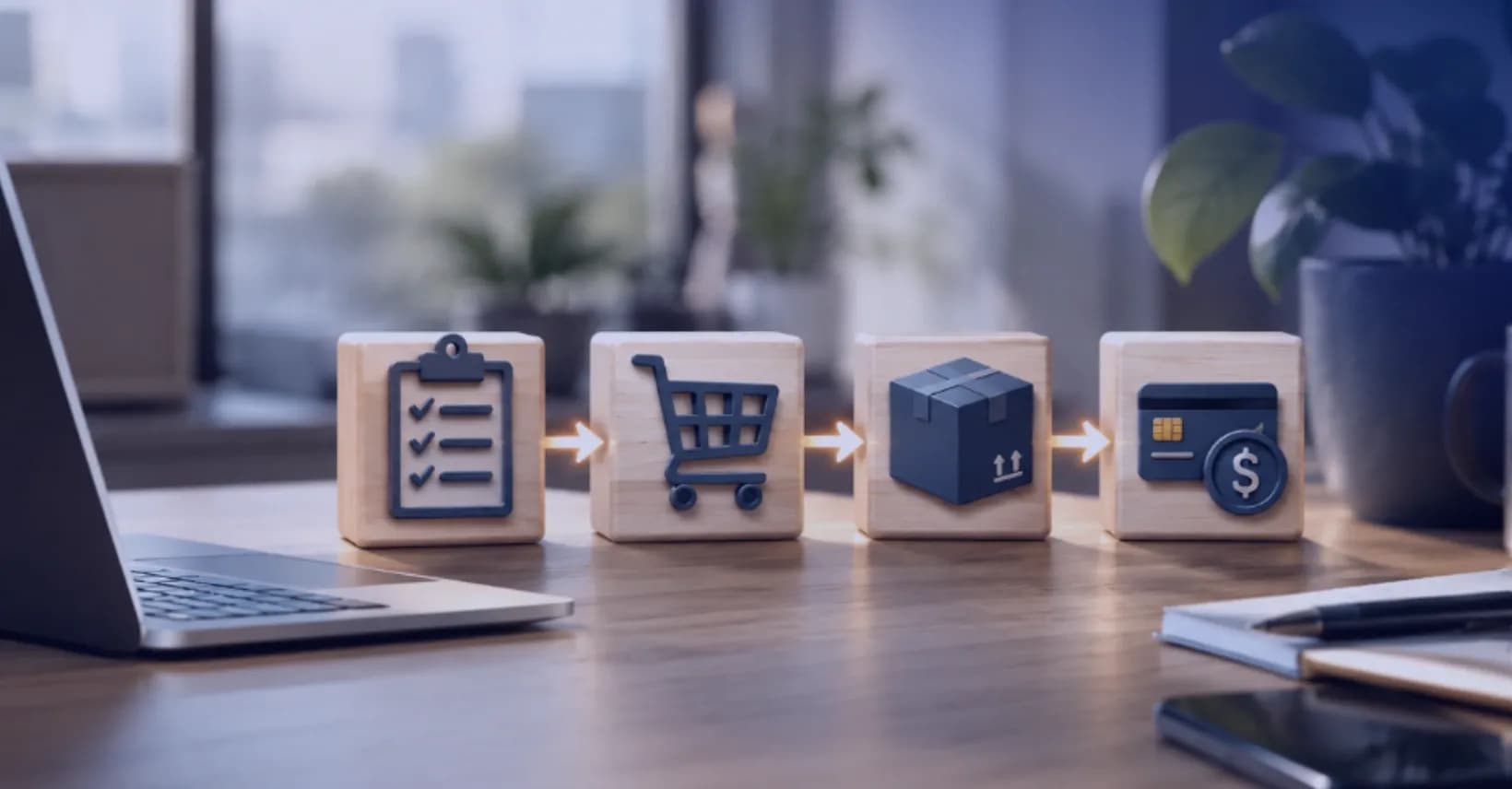
For years, Procure-to-Pay (P2P) was viewed as a necessary back-office process focused on managing purchase orders, invoices, approvals and supplier payments.
Today, that perception is rapidly changing.
As procurement becomes more strategic and organizations face growing pressure to control costs, improve compliance and increase operational efficiency, technology has emerged as the driving force behind modern P2P transformation.
The question is no longer whether organizations need a Procure-to-Pay process.
The real question is whether their P2P process is equipped to handle the complexity, speed and visibility demands of modern business.
Why Traditional P2P Processes Are No Longer Enough
Procure-to-Pay connects procurement and finance through a structured process that manages purchasing activities from initial request to final payment.
In theory, the process is straightforward.
In practice, however, many organizations still rely on manual approvals, spreadsheets, emails, disconnected systems and fragmented supplier data.
As businesses grow, these challenges become increasingly difficult to manage.
Procurement teams often struggle with:
Slow approval cycles
Limited spend visibility
Manual invoice processing
Supplier data inconsistencies
Invoice discrepancies
Maverick spending
Compliance risks
Lack of real-time reporting
The result is a process that consumes significant administrative effort while providing limited strategic value.
This is where technology is reshaping the entire P2P landscape.
The Evolution of Technology in Procure-to-Pay
Modern P2P platforms have evolved far beyond simple procurement software.
Today's solutions combine workflow automation, cloud technology, analytics, artificial intelligence and ERP integration to create a connected procurement ecosystem.
Rather than managing procurement activities through multiple disconnected tools, organizations can now centralize the entire purchasing lifecycle within a single platform.
From requisition creation and supplier onboarding to invoice reconciliation and payment processing, every step can be managed through a unified digital environment.
This level of integration creates greater control, transparency and operational efficiency across procurement and finance functions.
How Technology Is Transforming Each Stage of the P2P Process
Intelligent Requisition Management
The procurement journey begins when a business need is identified.
Modern procurement platforms simplify this stage through guided buying experiences, automated catalog management and standardized purchasing workflows.
Employees can easily locate approved suppliers, compare products and submit requests through user-friendly interfaces.
This reduces off-contract purchases and improves policy compliance before procurement activities even begin.
Automated Approval Workflows
Manual approval chains remain one of the biggest causes of procurement delays.
Technology eliminates these bottlenecks through configurable approval workflows based on spend thresholds, departments, categories, budgets, or business units.
Approvers receive instant notifications, requests move automatically through predefined workflows and organizations gain complete visibility into approval status.
The result is faster purchasing decisions without sacrificing governance.
Smarter Supplier Management
Managing supplier information across multiple systems creates unnecessary risk and inefficiency.
Modern P2P solutions centralize supplier data, contracts, certifications, compliance documentation and performance metrics within a single repository.
Procurement teams can evaluate suppliers more effectively while maintaining stronger governance and reducing administrative effort.
Technology also simplifies supplier onboarding, helping organizations establish approved supplier relationships more quickly and consistently.
Digital Purchase Order Management
Purchase orders are the foundation of procurement control.
Automated PO generation ensures accuracy while reducing manual effort.
Integrated systems automatically populate supplier information, pricing, contract terms and approval records, minimizing errors and improving traceability.
Organizations gain greater visibility into committed spend while ensuring purchases align with procurement policies.
Intelligent Invoice Processing
Invoice management has traditionally been one of the most labor-intensive aspects of P2P.
Today, technologies such as Optical Character Recognition (OCR), machine learning and automated invoice capture dramatically reduce manual processing requirements.
Invoices can be automatically extracted, validated, categorized and routed for approval.
This significantly improves processing speed while reducing human error.
Automated Three-Way Matching
One of the most valuable applications of P2P technology is automated invoice reconciliation.
Rather than manually comparing purchase orders, receipts and invoices, modern systems automatically perform three-way matching.
Discrepancies are flagged immediately, exceptions are routed for review and compliant invoices move seamlessly through the payment process.
This improves accuracy while strengthening financial controls.
Faster and More Secure Payments
Integrated payment capabilities help organizations process supplier payments efficiently while maintaining complete auditability.
Automated payment scheduling ensures adherence to negotiated payment terms while helping organizations avoid late-payment penalties.
At the same time, centralized payment data improves financial visibility and supplier relationship management.
The Growing Role of AI in P2P
Artificial intelligence is becoming one of the most transformative technologies in procurement.
While automation focuses on executing repetitive tasks, AI introduces decision-making support and predictive capabilities into the P2P process.
Organizations are increasingly using AI to:
Predict purchasing trends
Identify spending anomalies
Detect duplicate invoices
Recommend preferred suppliers
Improve demand forecasting
Flag compliance risks
Enhance contract intelligence
These capabilities allow procurement teams to move beyond transaction management and focus on higher-value strategic initiatives.
The Business Benefits of Digital P2P
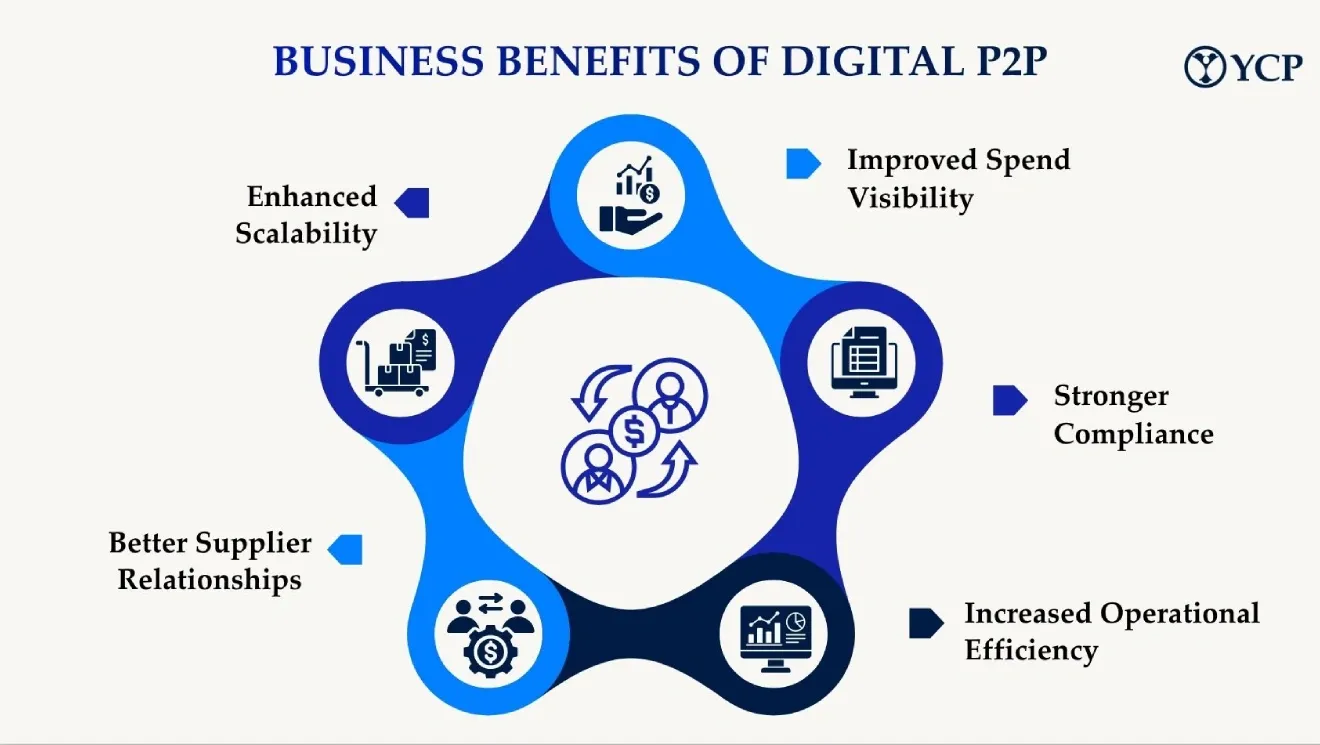
Organizations that successfully modernize their P2P processes often experience improvements across multiple areas of the business.
Improved Spend Visibility
Centralized procurement data provides real-time insight into purchasing activities, supplier spending and budget utilization.
This enables better decision-making and stronger financial control.
Stronger Compliance
Automated workflows ensure purchasing activities follow approved policies, contracts and governance requirements.
This reduces maverick spend and strengthens audit readiness.
Increased Operational Efficiency
Automation eliminates repetitive administrative tasks, allowing procurement and finance teams to focus on strategic priorities.
Better Supplier Relationships
Faster approvals, accurate payments and improved communication contribute to stronger supplier collaboration and performance.
Enhanced Scalability
As transaction volumes grow, automated processes can scale without requiring proportional increases in headcount or administrative effort.
Technology Alone Is Not the Solution
While technology delivers significant benefits, successful P2P transformation requires more than software implementation.
Many organizations invest in new platforms expecting immediate improvements, only to discover that underlying process issues remain unresolved.
Poorly defined approval structures, inconsistent supplier governance, unclear policies and fragmented data often limit the value of technology investments.
Digital transformation works best when technology is supported by standardized processes, strong governance and clear organizational accountability.
The most successful organizations view technology as an enabler of better procurement practices rather than a replacement for them.
Final Thoughts
Procure-to-Pay is no longer just a transactional process focused on purchasing and payments.
Technology has transformed P2P into a strategic business capability that connects procurement, finance, suppliers and stakeholders through a single digital ecosystem.
Automation, analytics, AI and integrated procurement platforms are helping organizations improve efficiency, strengthen compliance, increase visibility and make smarter purchasing decisions.
As procurement continues its evolution toward a more data-driven and strategic function, technology-enabled P2P will play an increasingly important role in driving operational excellence, financial performance and long-term business growth.
Get in Touch with Us
Get in touch with us to discuss your strategic needs and how we can help you develop a plan to accelerate your growth
Schedule a ConsultationRelated Articles

Control Before Spend: The Next Evolution in T&E
Financial Services
The Handoff Nobody Talks About: Where Strategic Sourcing Meets Source-to-Pay
Financial Services
The Four Pillars of High-Performing Source-to-Pay Organizations
Financial Services