Invisible Risk, Visible Impact: How Procurement Can Manage Hidden Vulnerabilities

In today’s complex supply chains, not all risks are immediately visible. While procurement teams often focus on cost savings and supplier performance, hidden vulnerabilities can quietly build up and create serious disruptions when least expected. From financial instability to geopolitical issues and compliance gaps, these risks may remain unnoticed until they have already caused damage. This makes it essential for organizations to strengthen their approach to supplier risk assessment and take proactive steps toward supplier risk mitigation.
The Challenge of Hidden Supplier Risks
One of the biggest challenges in procurement is that risks are rarely obvious at the surface level. A supplier may appear reliable based on pricing and delivery timelines, but underlying issues can pose serious threats.
Some common hidden vulnerabilities include:
Poor financial health
Dependency on a single raw material source
Weak regulatory compliance
Operational instability
Exposure to geopolitical disruptions
This is where a structured supplier risk assessment process including technology becomes critical.
The Importance of Supplier Risk Mitigation
By evaluating suppliers across multiple dimensions, procurement teams can identify potential red flags early, including:
Business Continuity risks
Financial risks
Operational risks
Geopolitical risks
Regulatory & Compliance risks
Environmental risks
However, identifying risk is only the first step. Organizations must also focus on supplier risk mitigation strategies to reduce exposure.
Diversifying the Supplier Base
Diversifying the supplier base is one of the most effective approaches. Relying heavily on a single supplier or region increases vulnerability, especially during global disruptions.
Organizations can reduce risk by:
Developing alternate suppliers
Maintaining a balanced sourcing strategy
Avoiding overdependence on one region or vendor
Creating contingency sourcing plans
These steps help ensure business continuity during unexpected disruptions.
Why Continuous Monitoring Matters
Another important aspect is continuous monitoring. Risk is not static; it evolves over time. A supplier that was stable last quarter may face challenges today due to market changes or internal issues.
Using regular monitoring practices allows procurement teams to stay updated and respond quickly.
Effective monitoring methods include:
Regular Supplier performance reviews
Supplier audits
Risk monitoring using external sources and tools
Real-time tracking systems
This enables procurement teams to identify issues before they escalate into larger disruptions.
The Role of Supplier Collaboration
Collaboration also plays a key role. Instead of treating suppliers purely as vendors, organizations should engage them as partners.
Open communication helps organizations:
Identify potential issues early
Improve supply chain transparency
Develop solutions collaboratively
Reduce the impact of operational disruptions
For example, if a supplier is facing operational challenges, early discussions can help in planning alternatives rather than reacting to sudden disruptions.
How Technology Supports Risk Management
Technology is increasingly supporting these efforts. Digital platforms and analytics tools enable better visibility into supplier disruption, helping procurement teams track risk indicators in real time.
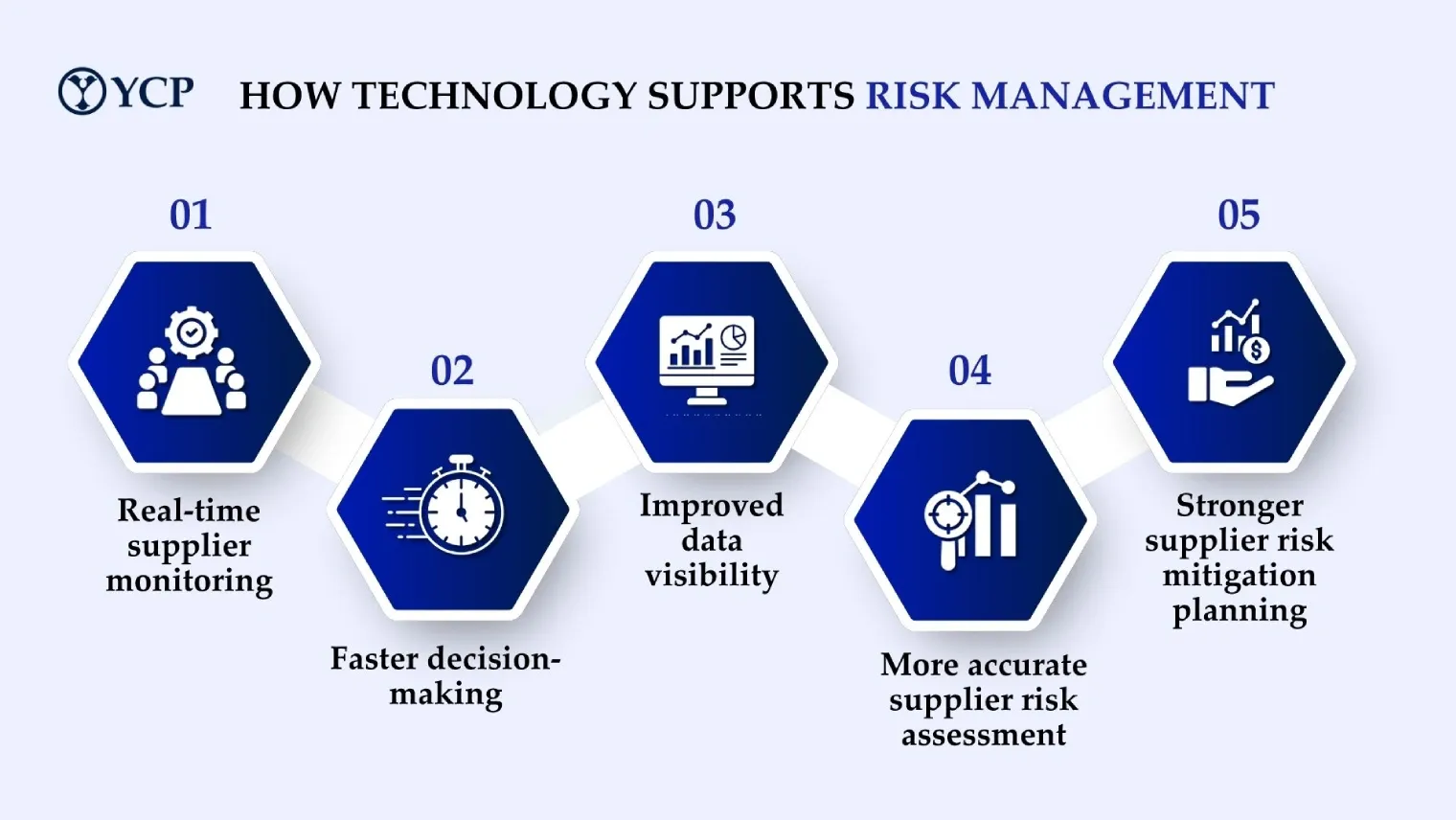 This makes supplier risk assessment more data-driven and effective while also supporting faster decision-making for supplier risk mitigation.
Conclusion
Hidden risks in procurement may not always be visible, but their impact can be significant. Organizations that rely only on surface-level evaluations are more likely to face unexpected disruptions.
By strengthening supplier risk assessment processes and implementing practical supplier risk mitigation strategies, procurement teams can move from reactive problem-solving to proactive risk management.
In doing so, they not only protect the supply chain but also create a more resilient and reliable procurement function overall.
Get in Touch with Us
Get in touch with us to discuss your strategic needs and how we can help you develop a plan to accelerate your growth
Schedule a ConsultationRelated Articles

Why Most RFP Responses Fail to Differentiate
Industrials
Why Manual S2P Is Dead: The Case for Digital Procurement Transformation
Industrials
Vendor Management Best Practices: How to Maintain Strong Supplier Relationships
Industrials