Procurement Transformation: From Cost to Strategic Value

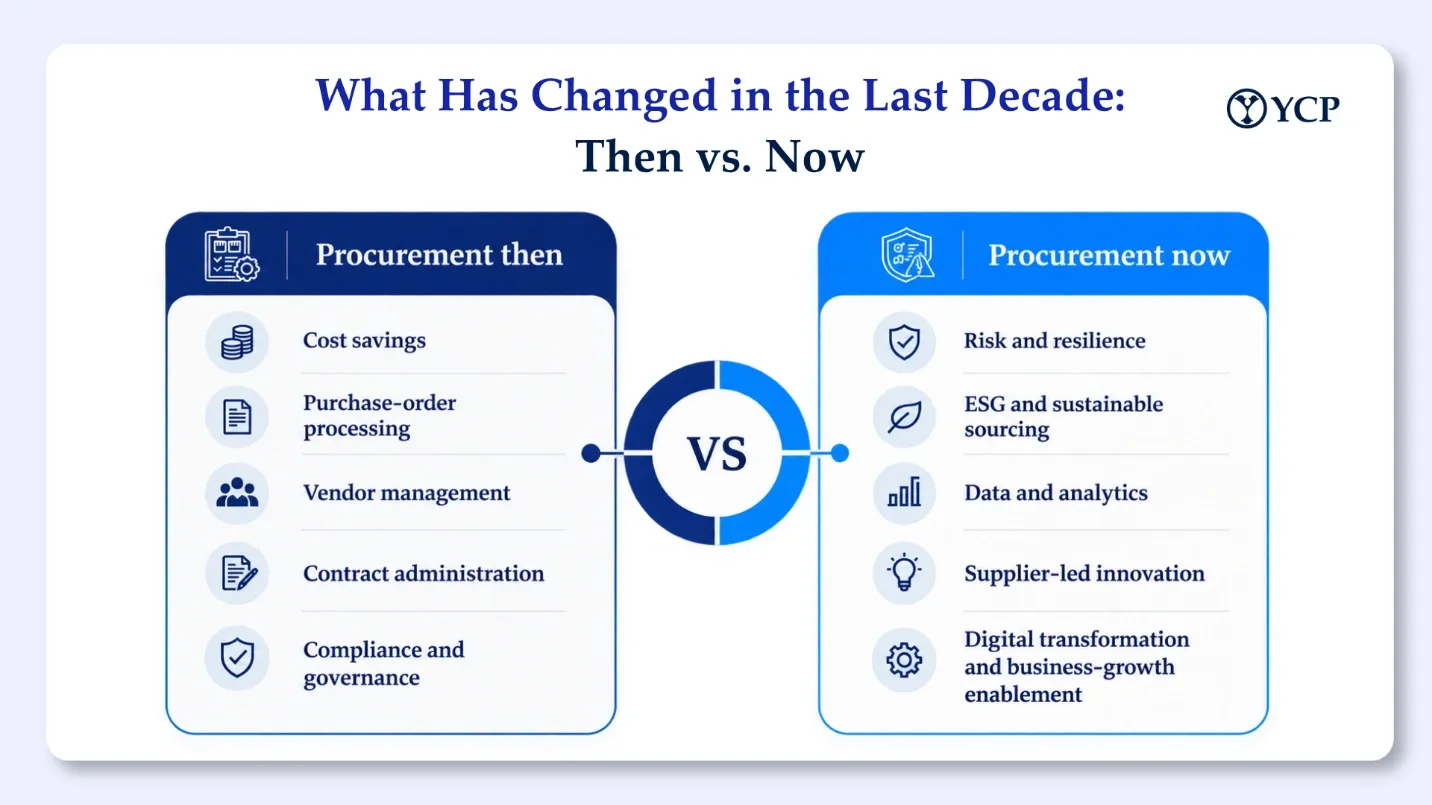
Ten years ago, procurement’s job description fit on an index card: negotiate contracts, manage vendors, cut costs and stay out of the way otherwise. It was a back-office function that showed up in the budget review and nowhere else.
That’s not the job anymore and it didn’t change because someone in HR rewrote the job description. It changed because procurement teams absorbed a decade of crises nobody else in the business wanted to own and came out the other side running risk management, ESG programs and supplier innovation instead of just managing spend.
Who Forced This Change? How Did We Get Here?
Nobody sat down and decided that procurement should become more strategic. It got dragged there.
A pandemic severed supply chains overnight. Wars and trade disputes redrew shipping routes that had been established for decades. Inflation made every category painful at once. Regulators started asking harder questions about where materials come from.
And somewhere in the middle of all that boards figured out something procurement teams had known for years: the cheapest supplier is not always the best one. It’s often the one that leaves you exposed the moment something goes wrong.
What Exactly Transformed?
Three things did most of the heavy lifting.
Digital tools such as spend analytics, automation and AI-assisted sourcing took over the transactional grind and freed people to actually think about strategy instead of chasing purchase orders.
Supply-chain resilience stopped being a checkbox and became a real budget line: diversified supplier bases, continuity planning and live risk monitoring.
And ESG moved from a line in the annual report to a set of sourcing decisions procurement teams are directly accountable for because so much of a company’s environmental and social footprint sits in its supply chain to begin with.
None of that happened because procurement asked nicely for more influence. It happened because the rest of the business had nowhere else to turn when supply broke, costs spiked or a regulator started asking pointed questions. Procurement was the function already standing closest to the problem.
The Part That’s Easy to Miss
The interesting shift isn’t that procurement got a bigger mandate. It’s that the measure of success changed underneath it.
A procurement leader used to get evaluated almost entirely on savings delivered. Now the conversation includes whether the supply base can survive a shock, whether sourcing decisions hold up to ESG scrutiny and whether suppliers are contributing ideas instead of just fulfilling orders.
That’s a much harder job to do well and a much easier one to fake with a dashboard and a new title.
What’s Next?
AI-assisted sourcing, predictive risk models and more connected supplier ecosystems are already changing how buying decisions get made.
The teams that treat those as genuine capability shifts and not just new software will keep expanding their role. The ones that bolt on a tool without changing how they work will end up right back where they started: negotiating contracts and calling it strategy.
So, genuine question, not rhetorical: where does your own procurement function actually sit today? Still defending its seat or already shaping decisions the rest of the business hasn’t caught up to?
Get in Touch with Us
Get in touch with us to discuss your strategic needs and how we can help you develop a plan to accelerate your growth
Schedule a ConsultationRelated Articles

7 Untapped Procurement Metrics That Reveal Hidden Value
Industrials
Why Process Mapping Is the Foundation of Procurement Excellence
Industrials
Is Your Material Data Quietly Costing You Millions?
Industrials