The Four Pillars of High-Performing Source-to-Pay Organizations
Nearly 40% of organizations lack visibility into their total vendor spend, leaving millions in potential savings and value opportunities untapped. As procurement evolves from a transactional function into a strategic business driver, leading organizations are rethinking how they manage spend, suppliers, purchasing and financial control.
The difference between average and high-performing procurement teams often comes down to four critical Source-to-Pay pillars. Together, these pillars help organizations improve visibility, strengthen supplier relationships, increase efficiency and maximize the value generated from procurement investments.
What Is Source-to-Pay?
Source-to-Pay (S2P) is the end-to-end process that connects sourcing, supplier management, procurement execution and payment activities. While many view S2P as a procurement workflow, leading organizations treat it as a strategic framework that aligns procurement decisions with broader business goals.
At the heart of every successful S2P strategy are four pillars that enable procurement teams to move beyond transactions and create measurable business value.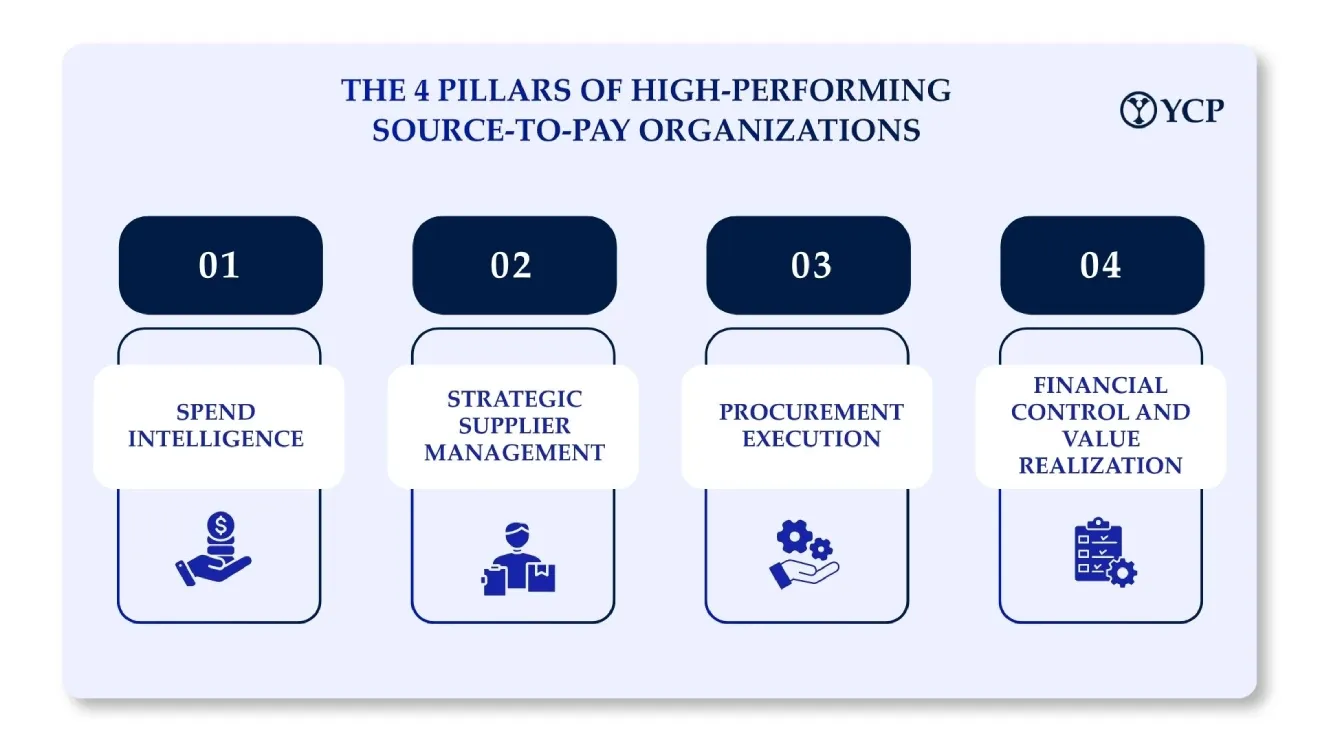
Pillar 1: Spend Intelligence
High-performing procurement organizations start with visibility.
Without a clear understanding of where money is being spent, procurement teams struggle to identify savings opportunities, control costs or make informed sourcing decisions.
Spend intelligence provides a consolidated view of organizational spending across suppliers, categories and business units. This visibility helps procurement leaders uncover inefficiencies, reduce maverick spending and identify opportunities for supplier consolidation.
Organizations that invest in spend intelligence can make better sourcing decisions because they are working with data rather than assumptions.
Why It Matters
You cannot optimize what you cannot see. Spend intelligence creates the foundation for every strategic procurement decision.
Pillar 2: Strategic Supplier Management
Suppliers play a critical role in cost, quality, innovation and business continuity. As a result, leading organizations focus on building strong supplier ecosystems rather than simply selecting the lowest-cost vendor.
Strategic supplier management includes supplier qualification, sourcing events, risk assessment, performance monitoring and contract management. It helps organizations identify suppliers that can support both immediate operational needs and long-term business objectives.
Rather than focusing solely on pricing, procurement leaders increasingly evaluate suppliers based on reliability, financial stability, sustainability performance and innovation capabilities.
Why It Matters
The strongest supplier relationships often create value far beyond cost savings. They improve resilience, reduce risk and support long-term growth.
Pillar 3: Procurement Execution
A strong sourcing strategy only delivers value when it is executed effectively.
Procurement execution covers the operational activities that move purchasing decisions from strategy to action. This includes requisitions, approvals, purchase orders, goods receipt and service verification.
Many organizations still rely on manual processes that create delays, increase administrative effort and weaken compliance. High-performing organizations standardize and automate procurement workflows to improve efficiency and ensure purchases align with approved contracts and policies.
Effective execution helps procurement teams reduce cycle times, improve user experience and strengthen purchasing controls.
Why It Matters
Even the best sourcing decisions can fail to generate value if employees bypass approved processes or purchase outside negotiated agreements.
Pillar 4: Financial Control and Value Realization
The final pillar ensures that procurement value translates into measurable financial outcomes.
Financial control includes invoice processing, three-way matching, payment execution and compliance monitoring. It creates a direct connection between procurement and finance, ensuring suppliers are paid accurately and according to agreed terms.
This pillar also helps organizations validate whether negotiated savings are actually being realized. Without strong financial controls, procurement value can easily be lost through invoice discrepancies, payment errors or contract leakage.
Why It Matters
Procurement success is not measured when a contract is signed. It is measured when savings and business value reach the bottom line.
Why the Four Pillars Matter
Many organizations focus heavily on one aspect of procurement while neglecting others. Some invest in sourcing but lack spend visibility. Others automate purchasing processes without improving supplier management.
High-performing organizations recognize that the four pillars work together.
Spend Intelligence identifies opportunities.
Strategic Supplier Management secures the right partners.
Procurement Execution ensures efficiency and compliance.
Financial Control captures and measures value.
When these pillars operate as a connected system, procurement becomes a strategic business capability rather than an administrative function.
The Future of Source-to-Pay
Technology is strengthening every pillar of Source-to-Pay. Artificial intelligence, automation and advanced analytics are helping organizations improve spend visibility, predict supplier risks, automate workflows and uncover savings opportunities faster than ever before.
As procurement continues to take on a more strategic role, organizations that strengthen these four pillars will be better positioned to improve resilience, control costs and support long-term business growth.
Conclusion
High-performing Source-to-Pay organizations do not succeed because they process transactions faster. They succeed because they have built strong foundations across four critical pillars: Spend Intelligence, Strategic Supplier Management, Procurement Execution and Financial Control.
Together, these pillars provide the visibility, control and agility needed to transform procurement from a cost center into a driver of business value. Organizations that invest in these capabilities today will be better equipped to navigate future challenges and create sustainable competitive advantage.
Get in Touch with Us
Get in touch with us to discuss your strategic needs and how we can help you develop a plan to accelerate your growth
Schedule a ConsultationRelated Articles

Control Before Spend: The Next Evolution in T&E
Financial Services
The Handoff Nobody Talks About: Where Strategic Sourcing Meets Source-to-Pay
Financial Services
Why Finance Leaders Need Real-Time Spend Visibility
Financial Services