Why Process Mapping Is the Foundation of Procurement Excellence

Transforming Procurement from a Transactional Function into a Strategic Business Advantage
In today's increasingly complex business environment, procurement leaders are expected to improve operational efficiency, strengthen compliance, mitigate supply chain risks, accelerate decision-making and deliver measurable business value.
Yet many procurement teams continue to operate with fragmented workflows, manual approvals, disconnected systems, unclear responsibilities and limited visibility across their Source-to-Pay (S2P) ecosystem.
The difference between average procurement teams and high-performing procurement organizations often comes down to one critical capability:
Process Mapping.
Far more than a documentation exercise, process mapping provides the foundation for procurement excellence by creating visibility, accountability and standardisation while providing a roadmap for continuous improvement.
Why Process Mapping Matters in Procurement
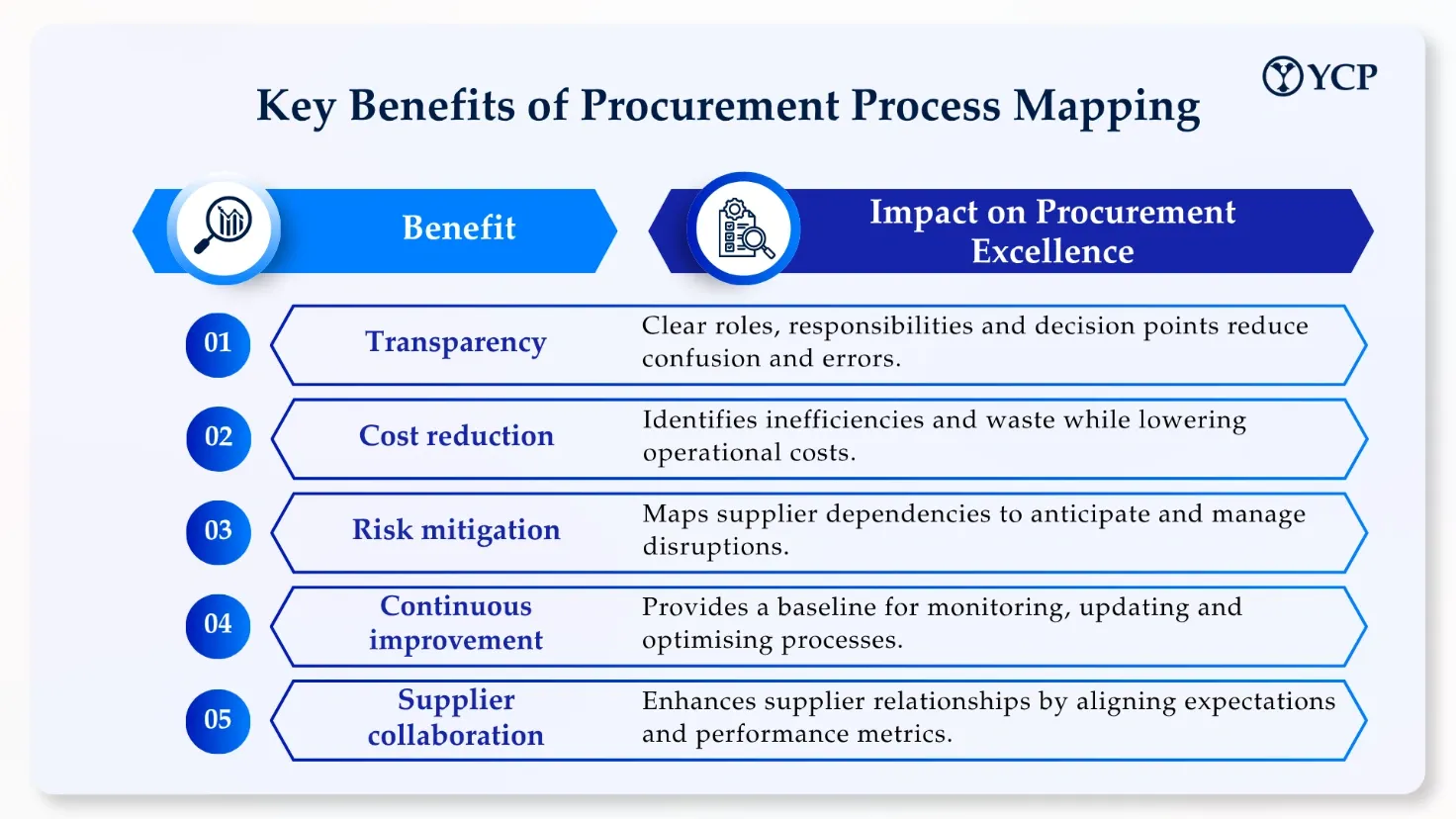
Process mapping provides procurement leaders with an end-to-end view of how work actually moves through the organisation. It helps identify inefficiencies, hidden risks and opportunities for improvement.
1. Visibility Across the Supply Chain
Mapping uncovers hidden tiers of suppliers, material flows and dependencies. This helps organizations anticipate risks and potential disruptions.
2. Efficiency Through Value Stream Mapping
By distinguishing value-added from non-value-added activities, procurement teams can eliminate waste such as redundant approvals and excessive paperwork while streamlining operations.
3. Risk and Compliance Management
A clear process map integrates ESG, compliance and certification requirements into procurement workflows. This helps organisations meet regulatory requirements and sustainability goals.
4. Strategic Alignment
Mapping links supplier networks directly to contracts, spend categories and sourcing strategies. This enables smarter negotiations and more effective supplier development.
The Risks of Ignoring Process Mapping
Without a clear understanding of how procurement processes operate end to end, organisations can face:
Blind spots in supplier tiers: Increased vulnerability to disruptions.
Excessive manual work: Higher costs and slower procurement cycles.
Compliance failures: Risk of penalties and reputational damage.
Reactive decision-making: Missed opportunities for strategic sourcing.
The Procurement Process Mapping Challenge
As procurement operations expand across multiple categories, stakeholders and systems, organisations often face four major challenges.
1. Fragmented Data and Documentation
Disconnected records and approval trails
Missing or outdated standard operating procedures (SOPs)
Limited visibility into procurement activities
2. Stakeholder Alignment Issues
Siloed decision-making across departments
Lack of cross-functional visibility
Inconsistent procurement practices
3. Complex Procurement Processes
Different workflows for materials, services, Capex and emergency purchases
Ad-hoc exceptions and manual workarounds
Multiple approval paths creating delays
4. Technology and Compliance Gaps
ERP limitations requiring manual interventions
Inconsistent audit controls
Supplier onboarding bottlenecks
Difficulty measuring procurement performance and ROI
Without a standardised procurement framework, organisations often experience delayed approvals, duplicate purchase requests, vendor management issues and compliance risks.
Our Approach: End-to-End Procurement Process Mapping
The engagement focused on creating a complete AS-IS view of the organisation's Source-to-Pay process before designing future-state improvements.
1. Procurement Scope Identification
The project team mapped procurement activities across all major categories including:
Direct Materials
Indirect Services
Capital Expenditure (Capex)
Emergency Purchases
This ensured complete visibility into procurement operations and eliminated process blind spots.
2. Documentation of Current Procurement Channels
The team analysed existing procurement workflows including:
SAP ERP processes
Purchase requisition routing
Approval workflows
RFQ and ARC procedures
Vendor onboarding activities
Email-based approval mechanisms
Every touchpoint was documented to understand how requests moved through the organisation.
3. Stakeholder Engagement
Cross-functional workshops and interviews were conducted with:
Procurement teams
Finance stakeholders
Compliance departments
Operations teams
Suppliers
These sessions helped validate the current-state process and uncover hidden operational challenges.
4. Pain Point Identification
The assessment revealed several improvement opportunities including:
Duplicate purchase requisitions
Delayed approval cycles
Vendor master data issues
Compliance and audit gaps
Process bottlenecks impacting procurement timelines
5. Visual Process Mapping
The entire Source-to-Pay journey was converted into detailed visual process maps using swimlane methodology.
The maps clearly illustrated the activities and responsibilities of each stakeholder.
Procurement Activities
Requirement initiation
RFQ/RFP management
Supplier evaluation and selection
Purchase order creation
Finance Activities
Budget approvals
Goods receipt verification
Invoice validation
Payment processing
Supplier Activities
Quotation submission
Material or service delivery
Invoice submission
The final workflow provided complete visibility into ownership, handoffs, decision points and exception handling.
6. Governance and Best Practice Validation
The mapped processes were reviewed against procurement excellence frameworks to ensure:
Regulatory compliance
Strong governance controls
Audit readiness
Industry best practices
Future digital transformation readiness
Project Management Workflow: Visio Process Mapping Sample
The process maps provided a visual representation of how activities moved across teams, systems and decision points. This helped create a shared understanding of the current procurement workflow and highlighted areas requiring intervention.
Business Impact
The procurement process mapping initiative delivered significant business value across multiple dimensions.
Faster Decision-Making
By clearly defining approval paths and eliminating process ambiguity, decision-making timelines were significantly reduced.
Improved Productivity
Visual workflow representation enabled teams to better understand responsibilities. This resulted in approximately 10% productivity improvement through reduced inefficiencies and streamlined coordination.
Enhanced Leadership Visibility
Management gained greater visibility into:
Process bottlenecks
Approval delays
Compliance risks
Improvement opportunities
This enabled more informed strategic decisions and accelerated transformation initiatives.
Stronger Compliance and Audit Readiness
Documented workflows created a clear audit trail and strengthened governance across procurement operations.
Foundation for Future-State Design
The AS-IS process maps provided a structured foundation for designing TO-BE procurement processes. This supported automation, digitisation and continuous improvement initiatives.
Conclusion
Procurement excellence begins with process visibility.
Organisations that invest in structured Source-to-Pay process mapping gain a deeper understanding of operational inefficiencies, compliance risks and transformation opportunities.
Through comprehensive process mapping, visual workflow design and stakeholder alignment, businesses can create leaner procurement operations, accelerate decision-making and build a scalable procurement function prepared for future growth.
Process mapping transforms procurement from a transactional function into a strategic enabler of business resilience and efficiency.
It is not just a diagramming exercise. It is the foundation for excellence, ensuring procurement teams can negotiate smarter, reduce risks and continuously improve.
Get in Touch with Us
Get in touch with us to discuss your strategic needs and how we can help you develop a plan to accelerate your growth
Schedule a ConsultationRelated Articles

7 Untapped Procurement Metrics That Reveal Hidden Value
Industrials
Procurement Transformation: From Cost to Strategic Value
Industrials
Is Your Material Data Quietly Costing You Millions?
Industrials