When Disruption Becomes the Norm: Rethinking Supply Chain Strategy for a Middle Eastern Services Provider

A leading Middle Eastern services provider was operating in an environment where supply chain disruptions could quickly translate into operational delays. Ration expiry, Red Sea blockages and the complexities of supporting operations across volatile regions were putting pressure on procurement and supply teams to respond faster while maintaining continuity.
The challenge was not limited to individual disruptions. As operational requirements became more complex, fragmented processes and limited visibility made it harder to anticipate issues, coordinate stakeholders and make timely decisions.
A leading Middle Eastern services provider engaged YCP Supply Chain to assess its supply chain and procurement operations and identify opportunities to build greater resilience, improve process efficiency and strengthen digital decision-making.
The objective was clear: move from reactive problem-solving to a more structured, data-driven and resilient operating model.
Challenges
The organization’s operating environment had become increasingly complex, with external disruptions amplifying existing process and visibility gaps.
Ration expiry risks creating avoidable cost and continuity concerns across operations.
Red Sea blockages causing delays and increasing uncertainty across critical supply routes.
Volatile operating regions making mission planning and supply coordination more difficult.
Fragmented processes limiting visibility across procurement and supply chain activities.
Limited performance visibility making it harder to identify gaps and respond proactively.
Increasing operational complexity requiring faster decisions and stronger coordination across teams.
These challenges meant that managing individual issues was no longer enough. a leading Middle Eastern services provider needed a more holistic view of its supply chain, with processes and digital capabilities designed to anticipate disruption rather than simply react to it.
Approach
YCP Supply Chain took a structured, data-led approach to understand the current operating model, identify the most critical gaps and translate them into practical improvement initiatives.
Assessing the End-to-End Operating Model
The engagement began with a comprehensive assessment of existing supply chain and procurement operations. The team examined processes, pain points and operational dependencies to understand where delays, inefficiencies and risks were emerging. This created a clear baseline for prioritizing improvements based on business impact.
Prioritizing the Most Critical Disruptions
Rather than treating every process gap equally, the assessment focused on the issues creating the greatest operational pressure. Ration expiry, supply delays, regional volatility and coordination challenges were evaluated to identify where targeted interventions could deliver the greatest improvement.
Strengthening Demand & Supply Planning
To move towards more proactive supply management, YCP Supply Chain recommended stronger demand forecasting and supply planning capabilities. These interventions were designed to improve visibility into requirements, support earlier intervention and reduce the likelihood of supply issues becoming operational disruptions.
Streamlining Procurement & Supplier Processes
The approach also addressed the processes surrounding strategic sourcing, supplier management and customs clearance. A more structured control-tower approach was recommended to strengthen coordination, improve supplier visibility and enable teams to respond more effectively when disruptions emerged.
Establishing Performance Management
A PDCA-based KPI management system was introduced to create a more consistent mechanism for tracking operational performance. By connecting performance measurement with continuous improvement, teams could identify gaps, act on them and monitor whether interventions were delivering the intended results.
Enabling Digital & Process Transformation
The transformation extended beyond individual procurement processes. YCP Supply Chain recommended digital communication mechanisms, alternative lab-testing processes and standardized SOPs to reduce manual coordination, improve information flow and create a more consistent way of working across operations.
Impact
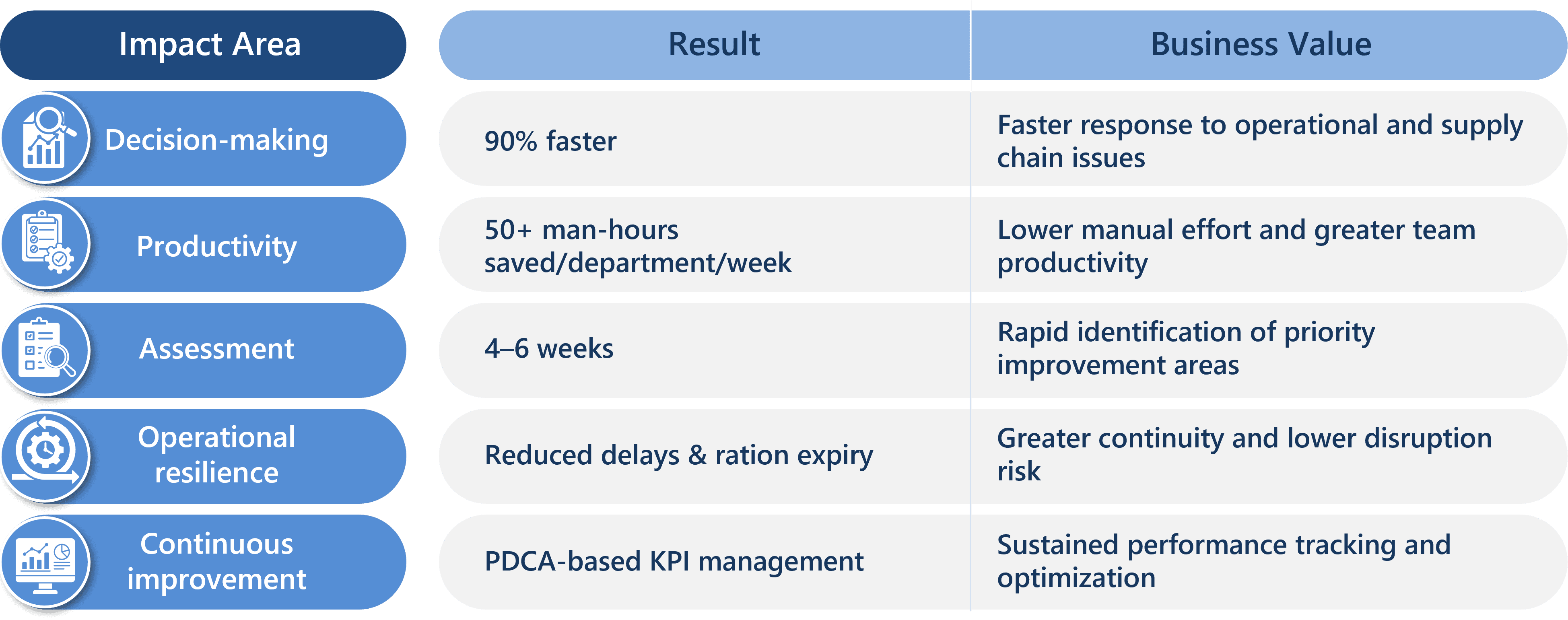
The transformation created measurable improvements in both operational efficiency and decision-making. The assessment itself was completed in 4–6 weeks, allowing a leading Middle Eastern services provider to move quickly from identifying challenges to establishing a practical roadmap for improvement.
More importantly, the recommendations created a foundation for shifting supply chain management from reactive issue resolution towards proactive planning, performance management and continuous optimization.
Impact at a Glance
Outcome
By taking a holistic view of supply chain and procurement operations, a leading Middle Eastern services provider moved beyond addressing individual disruptions to building a more resilient operating model.
The engagement brought together better planning, streamlined processes, stronger performance management and digital enablement to improve how the organization anticipates and responds to operational challenges.
The result was a clearer path towards faster decision-making, lower manual effort and greater supply chain resilience, while creating the foundations for continuous improvement across procurement and operations.