Ten Weeks to 5–8% Savings: Transforming Food Procurement for a Malaysian Hotel Chain
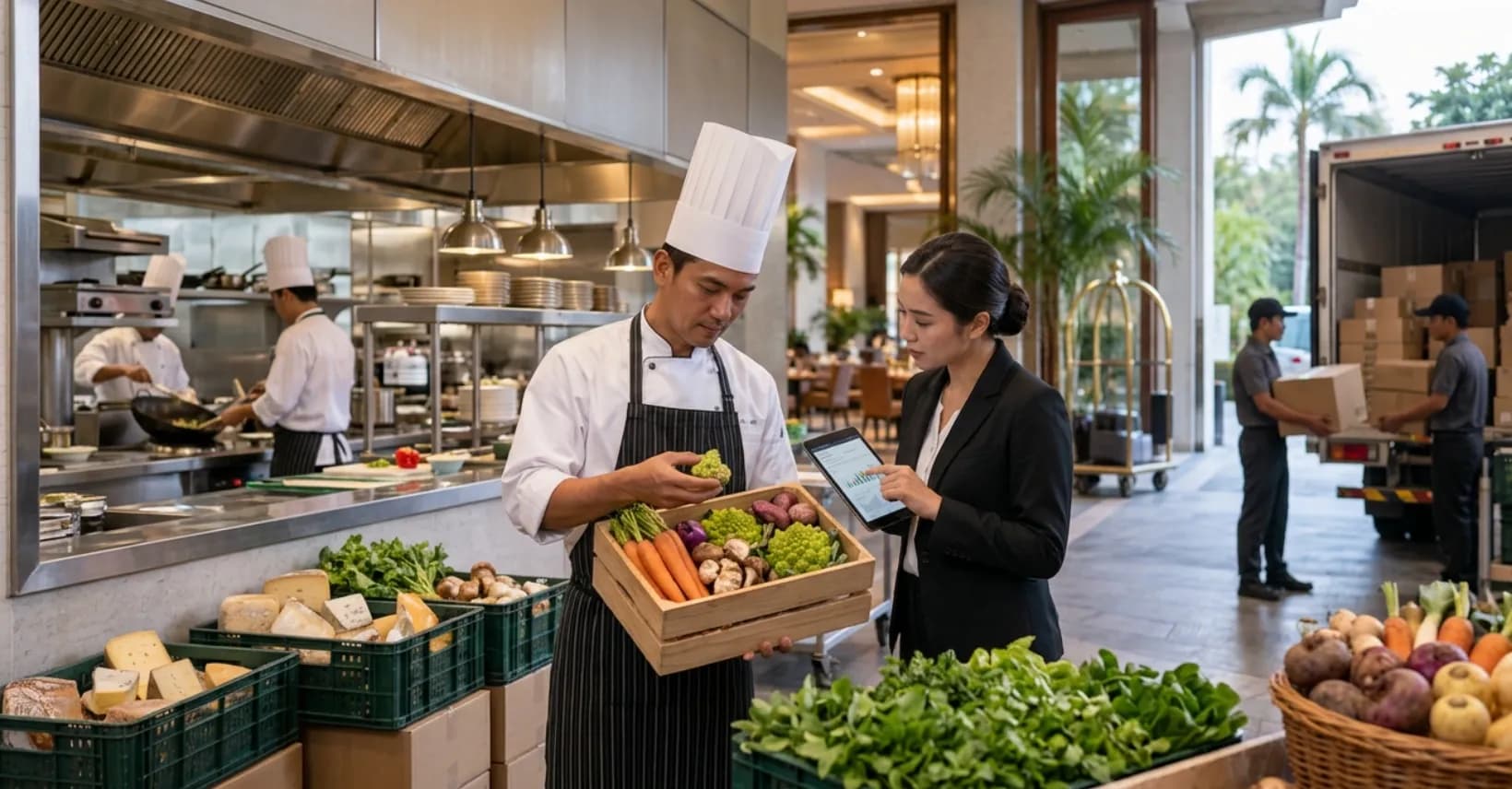
A leading Malaysian hotel chain was facing a sourcing challenge that extended well beyond negotiating better prices. With multiple hotel locations relying on a consistent supply of fresh, high-quality ingredients and raw materials, procurement needed to balance quality, availability, cost and supply continuity across a complex supplier landscape.
The challenge was becoming more pronounced as global price fluctuations affected budgeting, while heavy dependence on local suppliers limited sourcing flexibility. At the same time, approximately 70% of key horticultural items were being imported, creating additional exposure to logistics disruptions and supply risks.
The organization engaged YCP Supply Chain to strategically source direct materials, expand its supplier ecosystem and create a more resilient and sustainable sourcing model without compromising the quality standards expected across its hotels.
Challenges
The hotel chain’s direct materials sourcing environment had several structural challenges that made it difficult to balance cost, quality and supply reliability.
Maintaining consistent quality and freshness of perishable ingredients across multiple hotel locations.
High dependence on local suppliers limiting sourcing flexibility and increasing supply concentration risks.
Global price fluctuations creating uncertainty around procurement costs, budgeting and forecasting.
Heavy reliance on imports with around 70% of key horticultural items sourced internationally and exposed to logistical challenges.
Growing sustainability expectations requiring sourcing decisions to align with broader CSR objectives.
With demand spanning more than 250 SKUs, the organization needed a sourcing strategy that could go beyond short-term price negotiation. It needed greater visibility into the market, a broader supplier base and stronger mechanisms to validate supplier quality and reliability.
Approach
YCP Supply Chain took a structured strategic sourcing approach, combining market intelligence, supplier discovery, competitive bidding and commercial negotiation to strengthen the direct materials supply base.
Understanding Demand & Market Dynamics
The engagement began with a detailed assessment of demand and market conditions across more than 250 SKUs. YCP analyzed seasonal availability, pricing trends and SKU-level demand to understand the factors influencing cost and supply continuity. Stakeholders were also engaged to establish clear benchmarks for quality, product specifications and packaging requirements. This created a common sourcing framework and ensured that commercial decisions remained aligned with the hotel chain’s operational and culinary requirements.
Expanding the Supplier Landscape
To reduce reliance on a concentrated supplier base, YCP mapped and assessed 100+ potential suppliers across India, China, Vietnam, Russia, Ukraine and the US. Potential suppliers were evaluated through a structured Request for Information (RFI) process covering capabilities, compliance and logistics readiness. This widened the sourcing universe and gave the organization greater flexibility to evaluate suppliers beyond its existing network.
Validating Quality Through Competitive RFPs
With potential suppliers identified, YCP developed comprehensive Requests for Proposal (RFPs) covering product specifications, service levels, delivery timelines and commercial expectations. Supplier samples were coordinated and evaluated to validate consistency, freshness and alignment with culinary standards. This ensured that supplier selection was based not only on commercial competitiveness but also on the ability to consistently meet the quality requirements of the hotel chain.
Driving Price Discovery & Strategic Negotiation
YCP conducted market benchmarking to establish a clearer understanding of prevailing prices and total cost of ownership. Structured negotiations and competitive bidding were then used to create greater price discovery and secure favorable commercial terms while maintaining required quality standards. The approach allowed the organization to pursue savings without treating price as the sole supplier-selection criterion.
Building a More Resilient Supplier Base
The sourcing strategy also focused on reducing supply concentration and improving resilience. Multiple global suppliers were onboarded while new local suppliers were developed to create additional sourcing options. This helped shift the supply mix and reduce dependency on a limited set of suppliers, particularly for categories exposed to import and logistics risks. The result was a more diversified supplier ecosystem capable of supporting both immediate operational requirements and longer-term sourcing resilience.
Impact
The strategic sourcing program delivered measurable improvements in cost, supplier diversification and sourcing resilience.
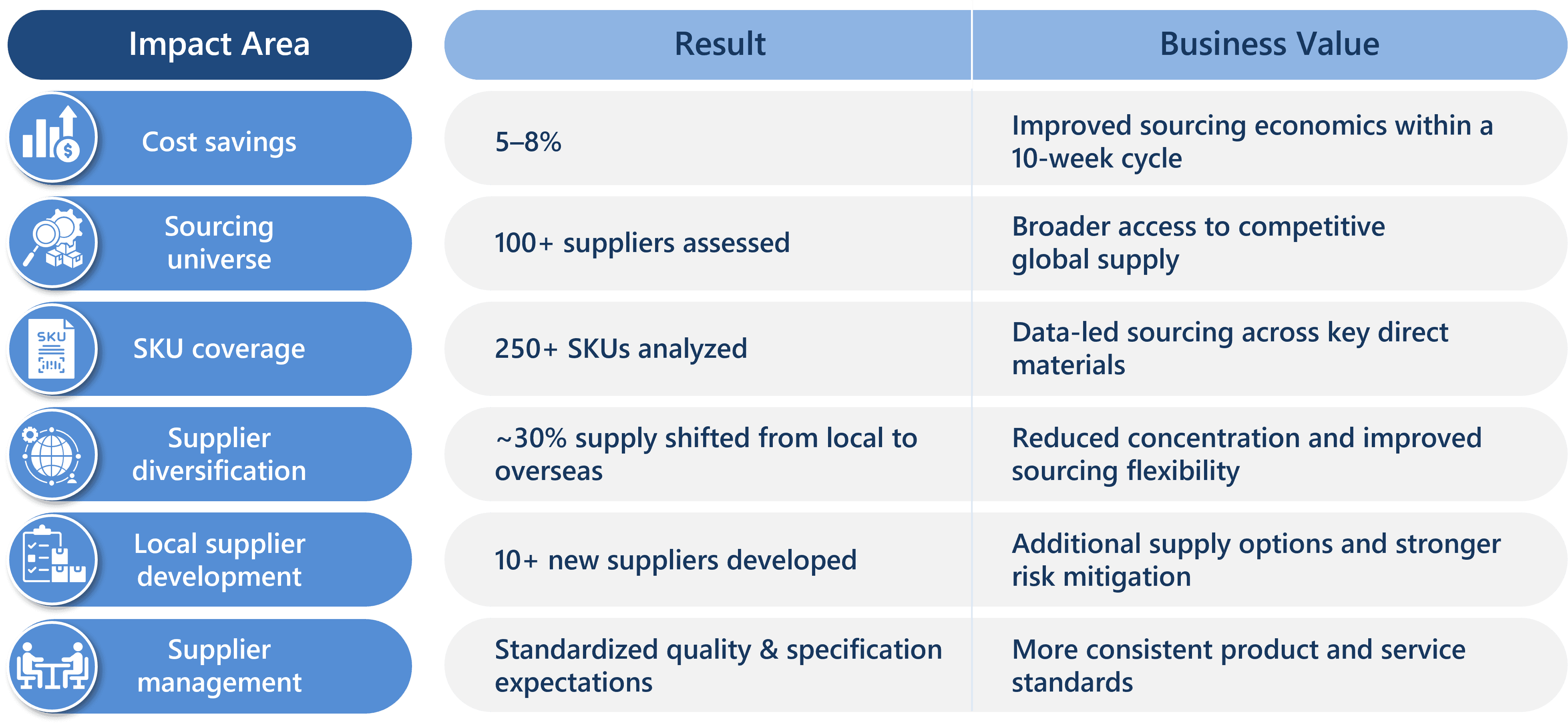
The organization achieved 5–8% cost savings within a 10-week sourcing cycle, while simultaneously strengthening supplier expectations around quality, packaging and product specifications.
The sourcing strategy also shifted approximately 30% of supply from local to overseas suppliers, while developing 10+ new local suppliers to provide additional risk-mitigation options.
Beyond the immediate savings, the engagement created a more structured and resilient sourcing model capable of balancing cost competitiveness, quality assurance, supply continuity and sustainability objectives.
Impact at a Glance
Outcome
By taking a strategic approach to direct materials sourcing, the hotel chain moved beyond traditional supplier negotiations towards a more diversified, data-driven and resilient procurement model.
The engagement combined detailed market analysis, global supplier mapping, rigorous supplier qualification, competitive bidding and strategic negotiation to deliver measurable savings while protecting quality and supply continuity.
The result was not simply a lower-cost supply base. It was a stronger sourcing ecosystem with greater supplier choice, reduced concentration risk and clearer standards for quality and sustainability, positioning procurement to better support the hotel chain’s operational and growth objectives.