Transforming Logistics Efficiency for a Leading Footwear Brand

A leading multinational footwear and apparel company was facing increasing pressure on its transportation operations as its retail footprint and product portfolio continued to grow across India. Managing diverse fleet requirements, last-mile delivery challenges and rising transportation costs had become increasingly difficult to manage, impacting both operational efficiency and cost control. To strengthen its logistics network and build a more scalable sourcing model, the organization partnered with YCP Supply Chain to optimize its indirect transportation operations.
Challenges
As the company expanded its distribution network, transportation planning became highly reactive. Transporters often struggled to meet urgent requirements, while fluctuating operational costs made commercial stability difficult to achieve. The growing complexity of urban deliveries and interstate logistics further added pressure on the supply chain.
Key challenges included:
Frequent last-minute truck requirements disrupting transportation planning
Variable fleet requirements involving 20-feet, 32-feet and 40-feet vehicles
Urban delivery restrictions that required shipment transfers into smaller vehicles for last-mile movement
Difficulty in finding and retaining qualified drivers
Volatile fuel prices, tolls and maintenance costs impacting long-term contracts
Regional compliance and transportation regulations creating operational complexity across states
Approach
YCP Supply Chain designed a structured sourcing and supplier evaluation program focused on balancing operational continuity with commercial optimization. The engagement began with detailed stakeholder discussions to understand logistics routes, transportation requirements, shipment timelines and operational pain points across the network.
A comprehensive supplier outreach program was then launched to identify capable transportation partners with strong operational coverage and scalable fleet capabilities.
The sourcing approach included:
Conducted an RFI process involving more than 50 transporters
Evaluating suppliers based on financial strength, fleet availability, coverage and operational capabilities
Shortlisting 10 suppliers through a structured evaluation process
Organizing supplier presentations and Q&A sessions to validate alignment with KPIs and service expectations
Conducting multiple rounds of commercial negotiations to optimize freight pricing and contractual terms
Finalizing three transportation partners to reduce supply chain disruption risks
Incorporating fuel escalation mechanisms and bank guarantees into long-term agreements
This structured approach helped create a more resilient transportation model while ensuring cost competitiveness and operational reliability.
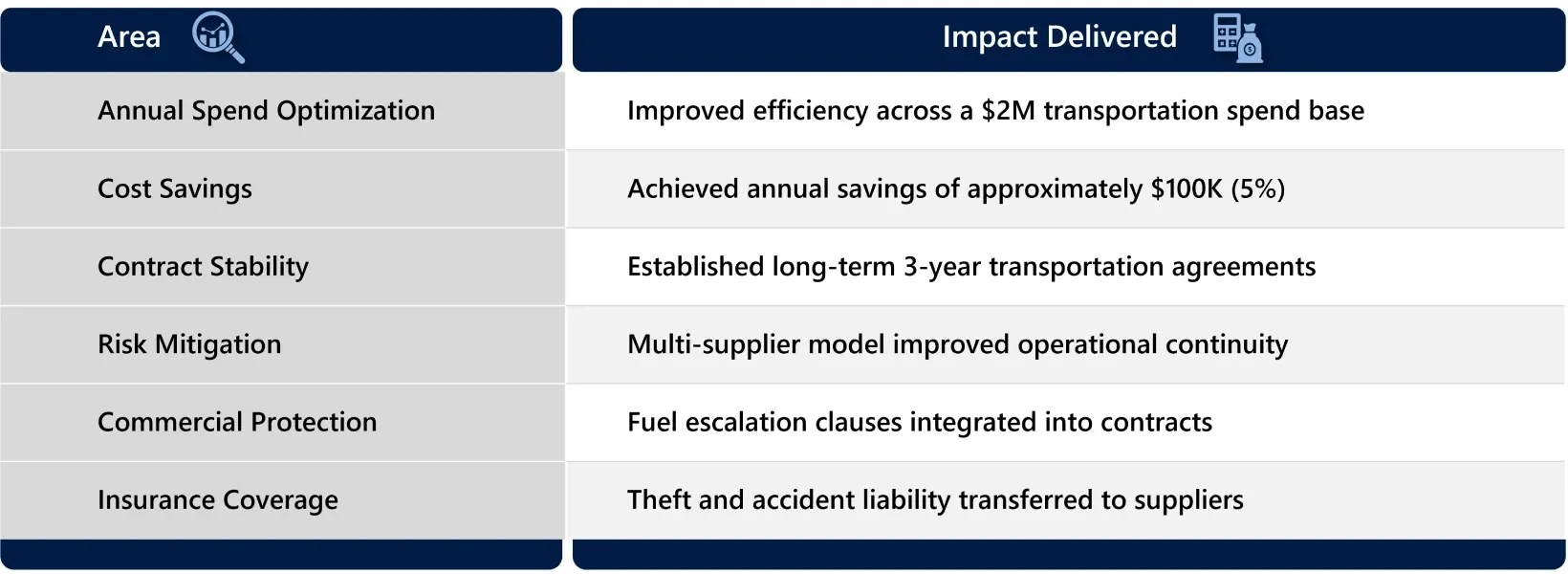
Business Impact
Outcome
The company successfully established a more resilient, cost-efficient and scalable transportation network capable of supporting long-term business growth and operational continuity.